
Backcountry Skiing
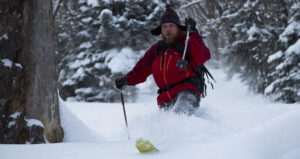 Backcountry skiing—also known as “skinning” for the nylon or mohair skins worn on skis to make walking uphill possible—is a rapidly developing sport with ancient origins; as far back as 8000 years ago people in Europe and Asia used animal skins on skis while hunting. In the last several years that concept has been modified and adopted by outdoor winter enthusiasts and has exploded upon the Vermont skiing scene. Alpine touring and telemark gear allow walking uphill on skis. They have enabled this sport to flourish, and it is gaining new devotees every year.
Why would someone want to walk uphill to ski down? Why not just take the lift at a ski resort? There are several good reasons. First, the walk uphill is extremely aerobic and it offers tremendous cardiovascular exercise; many people enjoy the climb even more than the descent! Second, it affords an opportunity to see beautiful and stunning natural winter vistas at a slow pace, something that is missed when hurtling downhill at high speeds. Third, it avoids the large crowds and expensive lift tickets at downhill ski areas; there is no cost to climb uphill, and rarely are there crowds. Finally, it is not limited by the hours of operation of formal ski areas; you can go any time you like (though it’s not so much fun in the dark). Those seeking adrenaline along with a big dose of solitude will be drawn to backcountry skiing.
Backcountry Ski Route #1 - Brandon Gap / Green Mountain National Forest Glades
Backcountry Ski Route #2 - Catamount Trail
Backcountry Ski Route #3 - Blueberry Hill
What to bring with you:
- Telemark or alpine touring skis and boots
- Ski poles with baskets
- Climbing skins
- Backpack
- Plenty of non-alcoholic liquid to drink throughout the day
- Lunch and extra food in case an unforeseen problem causes a delay on the trail
- Extra layers of clothing to put on at breaks or in an emergency
- Extra socks, mitts or gloves, hat, or balaclava
- Gaiters
- Scraper to remove ice buildup on skis
- Compass and whistle
- Map
- Duct tape
- Moleskin, small first aid kit & space blanket
- Headlamp & extra batteries
- Chemical hand warmers
- Small pad to sit or stand on for lunch
- Wax for waxable skis or Maxi-glide for no-wax skis
- Goggles and/or sunglasses
- Helmet
- Toilet paper (optional: snow works too, and if you do use TP, be sure to pack it out.)
- Sunscreen / Lip Balm
- Personal identification and medical insurance card
- Aspirin
- Any medications you might need
Tell a responsible person where you will be and when you expect to return.